
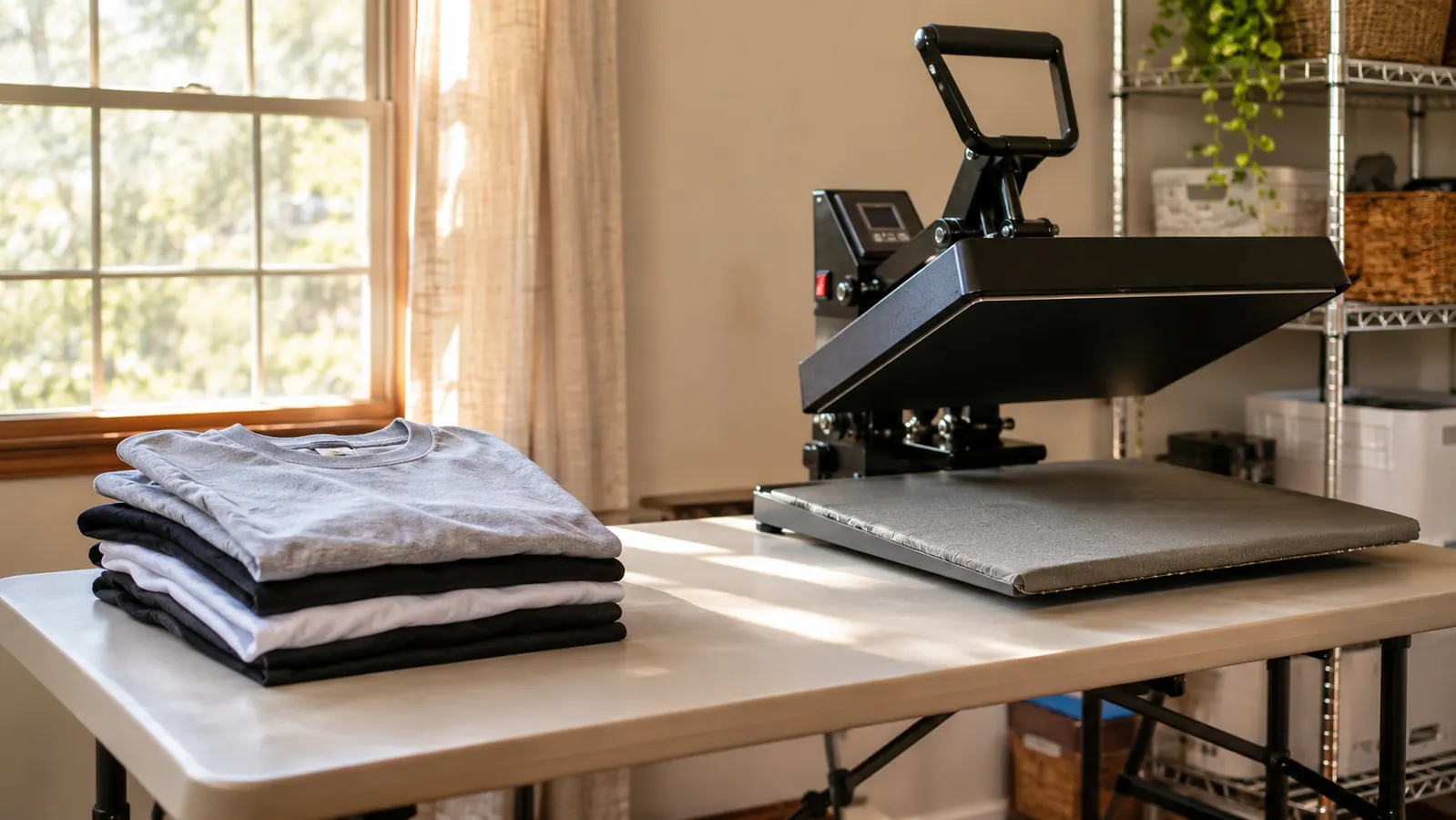
The Cricut EasyPress SE arrived in June 2026 and sat in its box on the folding table in my spare bedroom for two days. I had fourteen shirts to press for the summer Bible school volunteers at our church, black iron-on, and I had already made a mess of two test shirts with the household iron. I am 58, retired from a school office, and not the person who figures out new equipment on the first try. I had never used a heat press before. The press was the thing I ordered after the iron let me down, and this is the plain account of what it did.
The Joy Xtra came first, back in March, and it is the machine that got me into any of this. I cut the lettering for those fourteen shirts on it in June. Iron-on was new to me then. I had cut permanent vinyl and one piece of cardstock before that, and I had no feel for weeding letters that were meant to be pressed rather than stuck to a mailbox. I took it slowly and cut extra letters in case I lost one.
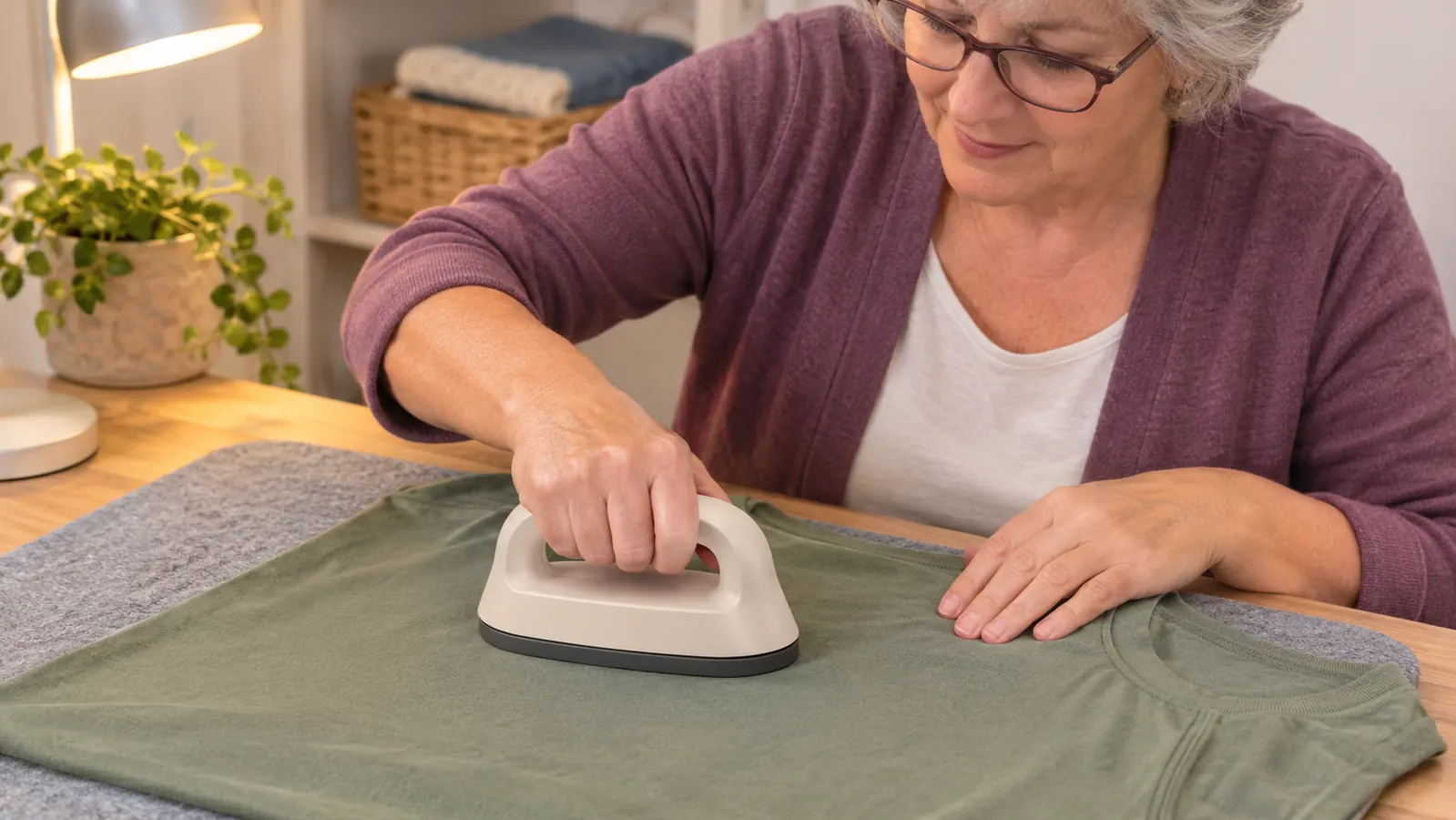
I tried the household iron on two test shirts before the press came. I guessed at the setting because I had no guide for an iron. When I pulled the carrier sheet back, the lettering lifted at the corners. Neither shirt was ever washed or worn. I threw both away and ordered the Cricut EasyPress SE that week. That is not a dramatic story. It is just the reason the press is on my shelf, and I am still a little sore about those two shirts.
The EasyPress SE is a 12 inch by 10 inch heat press. It has a ceramic surface and a one year limited warranty. It is a handheld press, so you set it down on the shirt and press. The Cricut Heat Guide gives the time and temperature for the material you are using, and I used it for every one of those fourteen shirts. I did not guess at anything after the iron. The guide told me what to set and I set it.
The shirts were for the volunteers who work with the children all week. I had the lettering cut and stacked in a shoebox by the middle of June. I did not want to hand over fourteen shirts with peeling letters, which is what the iron had given me on the first two. That was the whole standard I was working to. I was not trying to impress anyone. I just did not want the letters coming up in the wash.
By the fourteenth shirt I had a rhythm, and not one scorch mark.
The press I bought after two shirts failed
The Cricut EasyPress SE is the 12 inch by 10 inch press on the top shelf of my wire rack. It handled fourteen shirts, a canvas tote and two pillow covers. If you are working on a folding table and pressing shirt fronts, it is enough.
Amazon Check Today's Price on Amazon →I pressed all fourteen shirts with it, one at a time, on the plain pressing mat at the right end of the table. I waited for it to heat up, set it on the shirt, and when I was done with each one I set it back on its base. I checked the carrier sheet after each press. I have never burned myself with it and I have never scorched a shirt. That matters more to me than any feature on the box. A press that is fussy is a press I would not use.
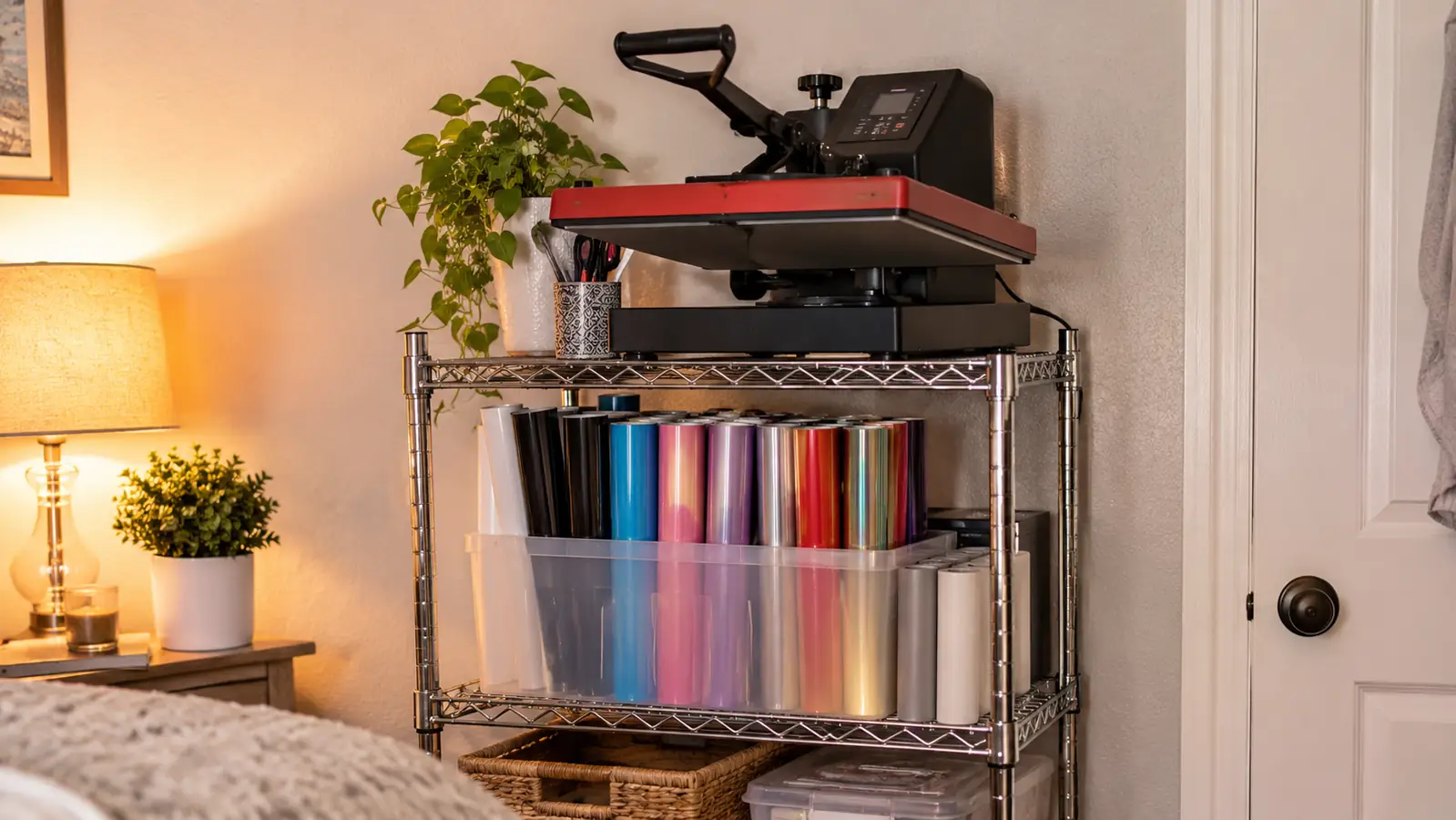
Since June it has pressed one canvas tote, two pillow covers for Ruth next door, and a few shirts for the fall fair at church. Some weeks it does not come off the shelf at all. I do a few projects a month, not a business. The press is five months old now, and it still sits on the top shelf of the wire rack between uses. The Joy Xtra stays on the left end of the table, with the tiptopcarbon tools standing in a mug beside it, and the press stays on the shelf until I need it.
There are two things I would want a friend to know. The first is that it has to heat up, so you wait before the first press. The second is that it is a handheld plate. On a shirt front that is fine. On anything much bigger, you are pressing section by section, and you have to keep track of where you have already been. I have not pressed a blanket or a large bag, and I would not buy it expecting to do that easily. It is a shirt front press in my house.
It also does not go near tumblers in my house. Iron-on is for fabric. I use the Joy Xtra and the Sooez vinyl for anything that curves. The press has one job here, and it does that job.
What I'd Tell You If We Were Sitting at My Kitchen Table
I would tell you that the press is not the hard part. The hard part is cutting the letters and weeding them cleanly, and the Joy Xtra and the tiptopcarbon hook did that work before the press ever came off the shelf. If your iron is lifting corners, the press is the fix I found. If your letters are ragged before they ever reach the fabric, a press will not save them. Buy the press for the pressing. Learn the cutting on scrap first. Keep the Cricut Heat Guide open on the laptop, because guessing is what cost me two shirts. And do not expect it to do a blanket. It is a 12 inch by 10 inch plate, and that is the size of job it wants.
The tool that ended my iron experiment
The Cricut EasyPress SE has a 12 inch by 10 inch ceramic plate and a one year limited warranty. It is the press I use for shirt fronts and small fabric blanks on a folding table. Today's price is on the Amazon listing.
Amazon Check Today's Price on Amazon →